
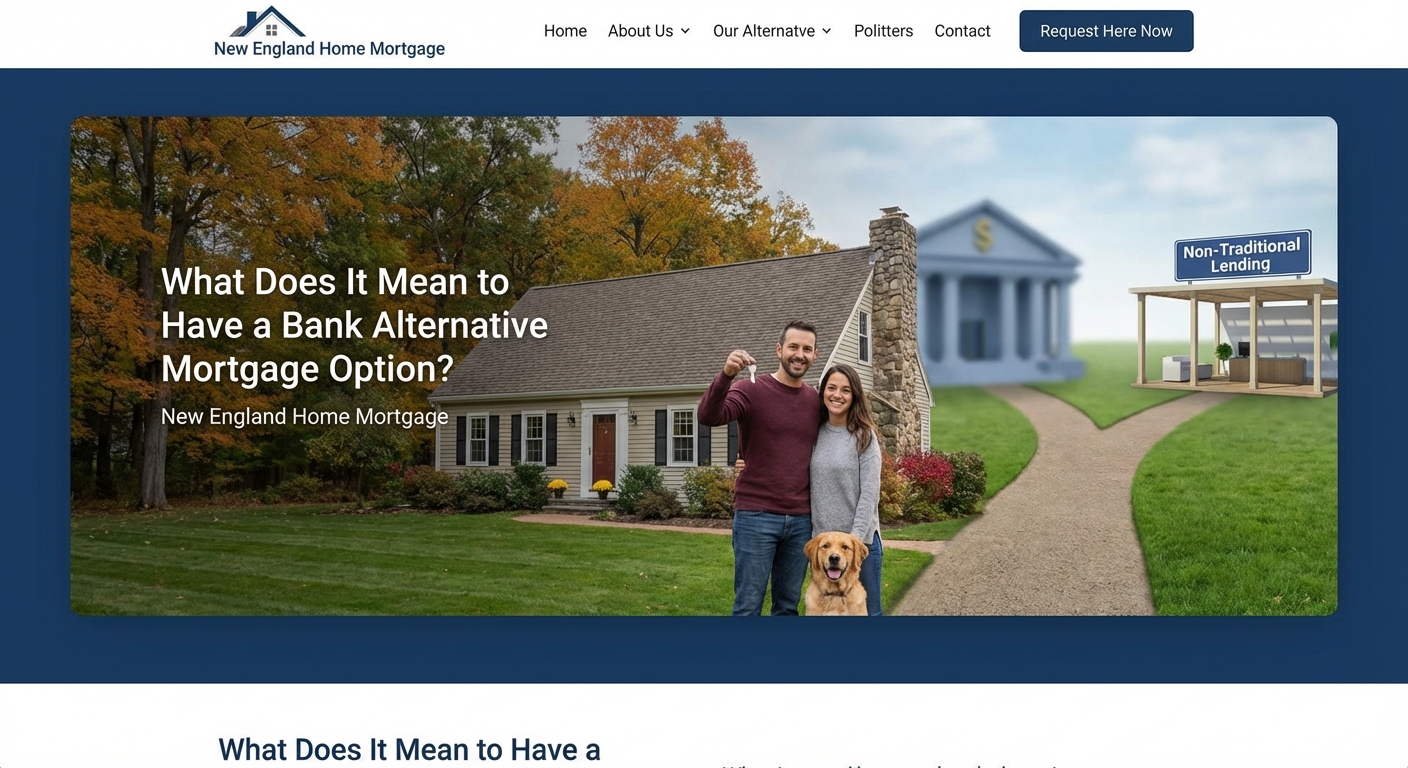
For many aspiring homeowners in Southington, CT, and across Connecticut, the path to purchasing a home seems straightforward: save for a down payment, walk into a big retail bank, and sign on the dotted line. But what happens when that traditional bank says "no"?
In today's diverse economy, the traditional "9-to-5" employment model is shifting. Gig workers, self-employed entrepreneurs, real estate investors, and retirees often find themselves shut out by rigid bank guidelines, despite having the financial means to afford a home. This is where Bank Alternative mortgage options come into play.
At New England Home Mortgage (NEHM), we believe that a unique financial profile shouldn't disqualify you from the American Dream. In this guide, we will explore what bank alternative mortgages are, who they are for, and why working with a local Southington expert like Brian Taylor can make all the difference.
Traditional banks (often referred to as retail lenders) typically sell their mortgages to government-sponsored entities like Fannie Mae or Freddie Mac. Because of this, they must adhere to strict underwriting guidelines. They look for a specific "box" of criteria:
If you fit into this box, a traditional loan is great. But if you are a small business owner who writes off expenses to save on taxes, or a consultant with fluctuating income, you might look "risky" on paper to a big bank, even if your bank account says otherwise.
A Bank Alternative mortgage—often referred to in the industry as a Non-QM (Non-Qualified Mortgage) or portfolio loan—is a financing solution designed for borrowers who do not fit the standard government-backed lending mold.
These are not "predatory" loans; they are simply flexible lending products that use different methods to verify a borrower's ability to repay the loan. Instead of relying solely on tax returns, alternative lenders might look at:
One of the biggest misconceptions is that you must go to the bank where you keep your checking account to get a mortgage. In reality, working with a mortgage broker like New England Home Mortgage gives you access to a wide array of wholesale lenders, including those offering bank alternative options.
You might be surprised to learn that many of your neighbors in Southington, Guilford, Avon and Madison, and the greater Connecticut area, utilize these loans. They are perfect for:
If you own a business, you likely take advantage of tax deductions to lower your taxable income. While this is smart for tax season, it hurts your ability to qualify for a traditional mortgage. A Bank Statement Loan allows us to look at the actual revenue flowing into your business accounts to determine your purchasing power.
Investors looking to expand their portfolio often hit a "cap" on how many loans traditional banks will give them. With DSCR (Debt Service Coverage Ratio) loans, the lender cares primarily about whether the rental income covers the mortgage payment. No personal income verification is required in many cases.
If you have retired or are living off investments, you may not have a monthly "paycheck." Asset depletion loans allow you to use your nest egg as a qualifying factor.
When seeking a specialized loan, local knowledge is power. National call centers often treat clients as numbers. At New England Home Mortgage, we understand the nuances of the Connecticut housing market.
Whether you are looking at a historic home in downtown Southington or a new build on the outskirts of Farmington, Brian Taylor and the team offer a personalized touch. As noted by our clients, we are known for being approachable and responsive—often contacting clients after hours to ensure commitments are met. This level of service is rare in the big-banking world.
"The entire New England Home Mortgage team were amazing throughout the entire process... We would recommend them to anyone looking for the BEST Mortgage experience." — Kyle & Katie, First-time home buyers.
Yes, but often marginally higher. These loans are a great way to begin homeownership!
No. The "subprime" loans of 2008 were often given to people who could not afford to repay them. Today's Non-QM/Alternative loans are heavily regulated. Borrowers must still demonstrate the Ability to Repay (ATR) through alternative documentation (bank statements, assets, etc.). These are safe, legitimate financial tools.
Down payment requirements vary based on the specific program and your credit score. While traditional FHA loans might allow for 3.5% down, alternative loans typically require between 10% to 20% down to offset the risk.
Absolutely. If you are a first-time buyer but are self-employed or have a unique income structure, these loans are an excellent vehicle to get you into the market and start building equity.
The best way is to get a professional consultation. You might actually qualify for a traditional loan and not know it! Fill out our pre-qualification form, and we can review your specific scenario to present you with all your options—both traditional and alternative.
Buying a home is one of the most significant financial decisions you will make, and it can be overwhelming—especially if you don't fit the standard mold. But you don't have to navigate this process alone.
At New England Home Mortgage, we have been recognized as a multiple Five Star Professional Award winner because we identify solutions to problems that other lenders can't. We streamline the loan process to make it convenient, stress-free, and successful.
Ready to explore your options? Whether you need a standard mortgage or a bank alternative solution, Brian Taylor and the NEHM team are here to help you unlock the door to your new home.
Contact us today at (860) 426-2447 or email brian@brianct.com.
APPLY NOW & GET PRE-QUALIFIED
Disclaimer: New England Home Mortgage is an Equal Housing Lender. Loan options and interest rates are subject to change based on market conditions and borrower eligibility. This content is for informational purposes and does not constitute legal or financial advice.


.png)

.png)


